How Much Does a Food Truck Cost? 2026 Price Guide
Food trucks cost anywhere from $15,000 to $250,000 depending on whether you’re buying used, new, or going fully custom. Most first-time operators land in the $40,000–$100,000 range for a functional rig that’s ready to serve customers.
This guide breaks down real price ranges by truck type, explains what drives costs up or down, and helps you figure out how much you actually need to budget before signing anything.
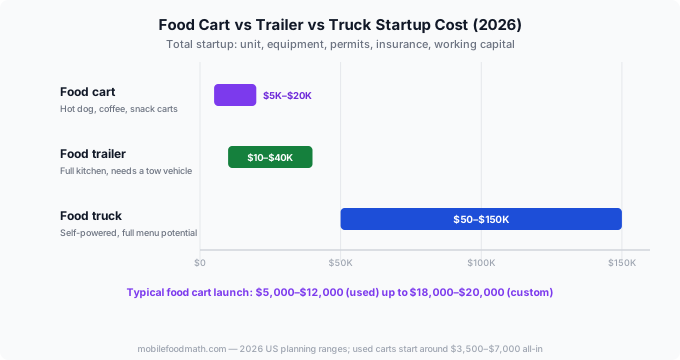
Quick Answer: Food Truck Cost Summary
| Type | Price Range | Best For |
|---|---|---|
| Used food truck | $15,000 – $60,000 | First-time operators, tight budgets |
| New mid-size truck | $50,000 – $100,000 | Established concepts, SBA loans |
| New large truck | $100,000 – $175,000 | High-volume operations |
| Custom-built truck | $100,000 – $250,000 | Unique builds, specialty cuisine |
| Food trailer | $20,000 – $100,000 | Lower cost alternative to trucks |
| Food cart | $2,000 – $20,000 | Minimal investment entry point |
The wide range exists because “food truck” covers everything from a stripped-down 16-foot box truck with a two-burner range to a 26-foot diesel rig with commercial fryers, a fire suppression system, a custom wrap, and a built-in POS system.
For total startup costs including permits, insurance, and working capital, see our food truck startup costs guide. This page focuses specifically on the vehicle and kitchen build-out price.
New Food Truck Costs
Buying a new food truck from a manufacturer or converter gives you a clean vehicle with a warranty and the ability to spec the kitchen exactly how you want it. New trucks typically come with a 1–3 year powertrain warranty and a 1-year equipment warranty.
Small/Starter Trucks: $50,000 – $75,000
A basic new food truck in the 14–18 foot range with a simple equipment package runs $50,000–$75,000. This price typically includes:
- New or low-mileage step van or box truck chassis
- 2–3 commercial burners or griddle
- One commercial refrigeration unit
- Hand sink and three-compartment sink
- Basic ventilation hood (non-fire suppression)
- Standard 200-amp electrical build-out
- Serving window with awning
This size works well for simpler menus — hot dogs, sandwiches, one or two specialty items. If your concept requires a flat top, a fryer, and a steam table simultaneously, you’ll need more space and power.
Mid-Size Trucks: $75,000 – $125,000
The sweet spot for most food truck operators is a 20–22 foot truck in the $75,000–$125,000 range. At this price you get:
- A proper commercial kitchen layout with 4–6 feet of prep space
- Multiple cooking stations (griddle + burners + fryer or oven)
- 220V power for commercial equipment
- Two-zone refrigeration (reach-in + cold prep table)
- Stainless steel counters and shelving throughout
- Proper exhaust hood with a fire suppression system (required in most states)
- Generator (6,500–8,000 watt) or shore power hookup
- Water tank (50–100 gallons fresh/grey)
Most taco trucks, burger trucks, and BBQ trucks operate comfortably in this range. A well-specced 22-foot truck at $100,000 can serve 150–300 customers per day without bottlenecking.
Large Trucks: $125,000 – $175,000
High-volume operators, catering-focused trucks, or businesses handling complex menus invest in 24–26 foot trucks in the $125,000–$175,000 range. At this tier:
- Chassis is typically a commercial Freightliner or Ford F-59 step van
- Full commercial kitchen with 8–10 feet of cook line
- High-BTU commercial burners (35,000–55,000 BTU per burner)
- Commercial convection oven, salamander, or specialty equipment
- 400-amp electrical service with dedicated circuits per appliance
- Dual generator setup or full shore power
- Built-in POS mounting, security cameras, and audio system
- High-end finishes: custom millwork, LED lighting, full exterior wrap
These trucks are built for daily high-volume service and catering contracts. A coffee truck or specialty dessert concept at this tier would have an espresso machine, soft-serve machine, and enough cold storage to run a full festival shift without restocking.
Used Food Truck Costs
The used market offers the biggest opportunity to stretch your budget — if you know what to look for. A truck that sold new for $100,000 three years ago might list for $45,000–$60,000 today.
Used Price Ranges
| Truck Age | Typical Price Range | Notes |
|---|---|---|
| 1–2 years old | $55,000 – $85,000 | Near-new, may still have warranty |
| 3–5 years old | $35,000 – $65,000 | Best value zone for most buyers |
| 6–10 years old | $20,000 – $45,000 | Inspect carefully, budget for repairs |
| 10+ years old | $15,000 – $30,000 | High risk, lower entry cost |
What to Check Before Buying Used
The mechanical condition of the truck matters far more than how the kitchen looks. Before making an offer:
Engine and drivetrain: Pay $150–$200 for a pre-purchase inspection from a diesel mechanic. Transmission issues on a step van can run $3,000–$8,000. An injection pump failure on an older diesel engine can be a $4,000–$6,000 repair.
Kitchen equipment condition: Run every piece of equipment. Fire up the burners, test the fryer to temperature, check that the refrigeration units hold temperature, and verify the exhaust fan pulls properly. Replacing a commercial refrigeration compressor costs $800–$2,000. A replacement commercial fryer is $1,500–$4,000.
Electrical system: Look for signs of amateur wiring — exposed connections, undersized wire gauges, non-commercial breaker panels. Getting a commercial electrical build-out re-done can cost $5,000–$15,000 if the original work wasn’t up to code.
Propane and plumbing: Check for leaks at every fitting. Look at the water tank condition and verify the grey water tank holds without seeping. Replacing a water system that’s grown mold or failed is a $1,500–$3,000 job.
Health department compliance: Call your local health department before buying. Some jurisdictions require re-inspection when a truck changes hands. A truck that passed inspection in a different county or state may need modifications to meet your local code.
Where to Buy Used Food Trucks
- UsedVending.com and RoamingHunger — large inventories, nationwide listings
- Facebook Marketplace and Craigslist — local deals, lower prices, higher risk
- Specialty dealers (FoodTruckEmpire, GoFoodTruck) — vetted trucks, higher prices
- Restaurant equipment auctions — lowest prices, no warranties, “as-is”
- Direct from operators closing their business — find via local food truck Facebook groups
For more details on buying used, see our used food trucks for sale guide.
Custom-Built Food Truck Costs
Custom-built trucks start around $100,000 and can reach $250,000 or more for high-spec builds. You’re paying for:
- A specific chassis type (sometimes a vintage vehicle or specialty platform)
- Equipment configured exactly for your concept
- Custom cabinetry, lighting, and interior finishes
- Exterior wrap, branding, and signage integrated from the start
- Longer lead time (typically 3–6 months from order to delivery)
Custom builds make sense when your concept requires specialized equipment that doesn’t fit in a standard conversion — a wood-fired pizza oven, a full espresso bar with three group heads, or a specialized ethnic cooking setup that needs custom ventilation.
The main risk with custom builds is cost overruns. Budget 15–20% contingency above your quote. Supply chain issues, equipment lead times, and change orders frequently push final costs 10–25% over the initial estimate.
What Makes Food Trucks More Expensive
Understanding cost drivers helps you prioritize where to spend and where to save.
Vehicle age and mileage: A low-mileage 2020 chassis costs $15,000–$25,000 more than a comparable 2014 chassis with 120,000 miles. For a truck you’ll drive 50+ days per year, a reliable chassis is worth the premium.
Kitchen equipment quality: Commercial equipment from Vulcan, Garland, or Manitowoc costs 40–80% more than entry-level brands but lasts 2–3x longer under daily service conditions. A $2,500 commercial griddle will outlast a $900 unit by years on a food truck.
Fire suppression system: Required in most states for trucks with cooking equipment. A properly installed Ansul or Amerex system runs $3,000–$6,000 installed. Budget this in from the start — it can’t be skipped.
Generator capacity: A quality 8,000-watt commercial generator costs $4,000–$7,000 installed. Undersizing your generator causes equipment to underperform and can damage appliances.
Exterior wrap and branding: A full vehicle wrap from a professional shop runs $3,500–$7,000. It’s one of your best marketing investments, but it’s also easy to skip on a tight budget and add later.
Plumbing and electrical complexity: Every additional sink, circuit, or water line adds to build cost. Simple builds with one cook line and one sink are cheapest. Multiple cooking stations with separate circuits add up quickly.
Ongoing Costs After the Purchase
The truck purchase is the biggest single check you’ll write, but it’s not the end of the capital requirement.
Insurance: Food truck insurance runs $150–$400/month depending on coverage and location. You need commercial auto, general liability, and equipment coverage at minimum. See our full breakdown of food truck startup costs for how this fits into your overall budget.
Permits and licenses: City-level food truck permits run $100–$1,000+ per year. A health department permit is another $200–$600 per year in most markets. Some cities require event-specific permits on top of your annual license.
Commissary kitchen: Most cities require food truck operators to use a licensed commissary for prep and cleaning. Budget $400–$800/month for a shared commercial kitchen.
Maintenance: Budget 5–8% of the truck’s value annually for maintenance. A $75,000 truck should have $3,750–$6,000/year in a maintenance reserve. Oil changes, brake jobs, and generator service add up — especially on older trucks.
Propane: Expect $80–$200/month in propane costs depending on cooking volume and equipment.
To see how these ongoing costs affect your actual profitability, use our mobile food startup cost calculator to model your specific scenario.
Food Truck vs Food Trailer vs Food Cart: Cost Comparison
Not sure which type of mobile food unit makes sense? Here’s how the costs stack up:
| Feature | Food Truck | Food Trailer | Food Cart |
|---|---|---|---|
| Starting price | $15,000 used | $20,000 used | $2,000 new |
| Mid-range new | $75,000–$125,000 | $40,000–$80,000 | $8,000–$15,000 |
| Fuel costs | High (own engine) | Low (towed) | None |
| Requires tow vehicle | No | Yes | No |
| Mobility | Drive anywhere | Limited by tow vehicle | Carry or roll |
| Kitchen capacity | High | Medium-High | Low |
| Setup time at location | 15–30 minutes | 30–60 minutes | 5–15 minutes |
| Best for | Full-service, catering | Events, lower budget | Simple menus, markets |
Food trailers are the most popular alternative to trucks — they cost 20–40% less for the same kitchen capacity because you’re not paying for a vehicle drivetrain. The trade-off is needing a tow vehicle and more setup time at each location.
Food carts are the lowest-cost entry point but limit you to simple menus that don’t require extensive cooking equipment. Hot dogs, coffee, fresh-squeezed juice, and ice cream are the classic cart concepts.
For a full cost comparison, see our food trailer startup cost guide and food cart startup cost guide.
How to Finance a Food Truck
Most operators don’t pay cash for a truck. Common financing options:
SBA 7(a) loans: Available for trucks above $50,000 with a solid business plan. Rates in 2026 run 10–13% with 7–10 year terms. Requires good credit (680+) and typically 10–20% down.
Equipment financing: Some truck manufacturers and dealers offer in-house financing. Rates vary widely — compare carefully.
ROBS (Rollover for Business Startups): If you have a 401k or IRA, ROBS lets you use retirement funds to fund the truck without early withdrawal penalties. Requires legal setup ($5,000–$10,000 in fees).
Personal savings: The cheapest option — no interest, no approval process. Best approach: combine savings with a smaller SBA loan to preserve cash for operating capital.
Business credit cards: Only for small purchases under $10,000. Do not put a $75,000 truck on a card.
To see how the truck purchase fits into your total capital needs, use our startup cost calculator.
Is a Food Truck Worth the Investment?
A well-run food truck can generate $200,000–$500,000 in annual revenue and clear $30,000–$100,000 in profit after expenses. The investment breaks even in 2–4 years for most operators.
The trucks that struggle to break even share common problems: they overspent on the initial build, underestimated operating costs, or couldn’t land consistent high-traffic locations.
Spending $120,000 on a truck for a concept that realistically generates $150,000/year in revenue leaves almost no margin for error. Spending $60,000 on a solid used truck for the same concept dramatically improves your odds.
For a realistic look at what food trucks actually earn and how long payback takes, see our food truck profit guide.
Frequently Asked Questions
How much does a food truck cost on average?
The average food truck cost is $75,000–$100,000 for a new mid-size build ready to pass a health inspection. Used trucks average $30,000–$50,000. The true “average” is hard to pin down because the market spans from $15,000 bare-bones used units to $250,000 custom builds.
What is the cheapest way to get into a food truck business?
The cheapest path is buying a used truck in the $15,000–$25,000 range and doing some of the build-out work yourself (painting, shelving, wrapping). The risk is higher mechanical and equipment repair costs. Budget at least $5,000–$10,000 extra for repairs and upgrades on a very cheap truck.
How much does a food truck cost per month to operate?
Monthly operating costs for a food truck typically run $5,000–$12,000 per month depending on market and scale. This includes commissary ($400–$800), insurance ($150–$400), fuel ($300–$600), permits (amortized), maintenance reserve, and loan payments if financed.
Can you buy a food truck for under $20,000?
Yes. Trucks in the $15,000–$20,000 range exist, but they’re typically older (10+ years), have higher mileage, and may need significant kitchen equipment work or health department compliance upgrades. Budget an additional $5,000–$15,000 for repairs and upgrades when buying in this price range.
How much does it cost to build out a food truck yourself?
Converting a bare step van or box truck into a functioning food truck costs $30,000–$80,000 for equipment, plumbing, electrical, and permits. You save on the vehicle itself (a used step van chassis runs $8,000–$20,000), but the total project cost often equals what you’d pay for a turnkey converted truck.
What’s the difference in cost between a food truck and a food trailer?
Food trailers typically cost 20–40% less than food trucks with equivalent kitchen capacity. A 22-foot food trailer with a full commercial kitchen runs $40,000–$70,000 new vs. $75,000–$125,000 for a comparable food truck. The trade-off is you need a truck to tow it.
How long does a food truck last?
A well-maintained food truck runs 10–15 years. The kitchen equipment often lasts longer than the vehicle. Chassis life depends heavily on mileage and maintenance — a step van with 200,000+ miles is getting toward end of life, while the same chassis at 80,000 miles with proper maintenance has years left.
Methodology & Assumptions
Cost ranges are planning models assembled from the line items and assumptions shown in this guide. They are not quotes or guaranteed market averages. This page identifies 2 cited sources; official fees and requirements should be checked against those links. AI tools may assist with organization and drafting, but they are not a source and no independent food-truck operator review is claimed. Local rules and prices can change; verify them before committing funds. Last updated: 2026-08-05.
Sources & verification
- U.S. Small Business Administration — Calculate your startup costs Planning framework for separating the vehicle, equipment, permits, and working capital.
- FDA — Food Code 2022 Model food-safety requirements that can affect build-out scope.
Regulations and fees change. Confirm the current application, fee schedule, and operating rules with the issuing agency before purchasing a vehicle or signing a commissary agreement.